




Part III: Technique -Building a Technical Model for the Javelin Throw
Part III: Technique
Building a Technical Model for the Javelin Throw
Technique is the part of javelin throwing that most people want to talk about first. That makes sense. The throw is fast, powerful, violent, beautiful, and sometimes confusing. A good throw can look effortless. A bad throw can look like the athlete is fighting the javelin, fighting the runway, and sometimes fighting their own body.
Part III of FUREY’S Field Guide to Javelin Training is built to make technique easier to understand, easier to coach, and easier to improve over time. The goal is not to create a long list of perfect positions that every athlete must copy exactly. The goal is to give athletes and coaches a clear technical model. That model should help them see what matters, understand why it matters, and choose the right correction at the right time.
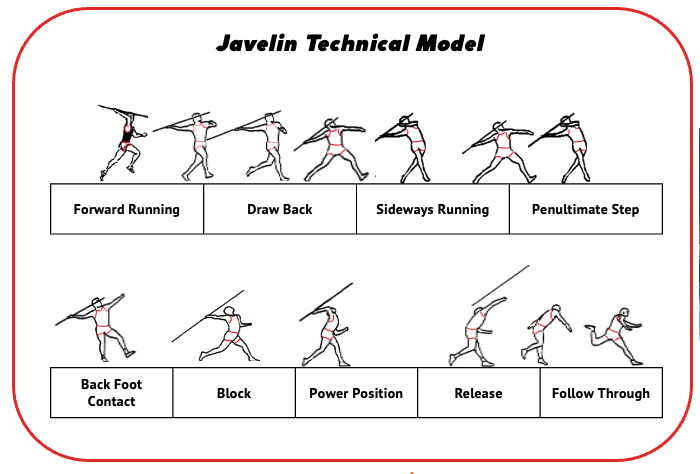
The javelin throw is not one position. It is a sequence. The athlete must run, carry the javelin, create alignment, accelerate, transfer force from the ground, block, release the javelin through the point, and safely move through the throw.
Each phase matters, but no phase exists by itself. A problem at release may begin during the approach. A sore arm may come from poor rhythm, poor block mechanics, or too much throwing volume. A weak block may come from poor foot placement, incorrect sequence, lack of stability, poor mobility, fear of speed, or overthinking.
That is why this section begins with a model.
The Purpose of a Technical Model
A technical model is a map. It is not the territory itself. Every athlete is different. Some throwers are tall and elastic. Some are shorter and powerful. Some have long throwing backgrounds. Others are new to the event. Some athletes feel rhythm naturally. Others need more structure.
A good model allows a coach to adjust to the athlete while still protecting the main principles of the throw. It gives the coach and athlete a shared language. It also helps keep technical work from becoming random.
| Coaching Idea | What It Means | Why It Matters |
|---|---|---|
| Alignment | The body and javelin are organized toward the target. | Good alignment allows force to travel into the javelin instead of leaking away from the throw. |
| Action and reaction | Each movement creates the next movement. | The throw becomes easier to understand as a connected sequence. |
| Acceleration and rhythm | The athlete relaxes, builds speed, and throws with increasing tempo. | Speed only helps if the athlete can use it at release. |
These three ideas are simple enough for a beginner to understand, but deep enough to guide advanced coaching. When a throw goes wrong, the coach can usually ask three questions. Was the athlete aligned? Did the sequence happen in the right order? Did the athlete accelerate into the throw with rhythm, or did they slow down and force it?
Definition of Key Terms
Before talking about the phases of the throw, the athlete and coach need a shared language. This is important because communication shapes learning. If the coach and athlete do not mean the same thing when they use a word, technical progress becomes much harder.
| Term | Simple Definition |
|---|---|
| Alignment | The javelin, shoulders, hips, and approach direction are organized toward the target as much as possible. |
| Block | The front leg action that helps stop and redirect forward momentum so energy can move up the body and into the javelin. |
| Throwing stride | The final transition from the back foot to the block. It is an active and powerful movement into the throw. |
| Point | The tip of the javelin. Throwing through the point means the javelin leaves the hand cleanly in the direction of flight. |
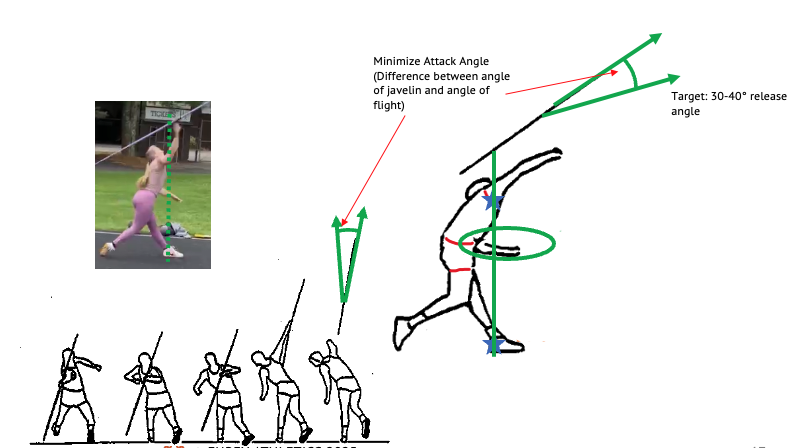
| Attack angle | The difference between where the javelin is pointing and where it is actually flying. |
These terms matter because the athlete should not simply be told that a throw was good or bad. The athlete should learn what happened, why it happened, and what to do next.

The Phases of the Throw
The javelin throw can be broken into several phases. This breakdown gives the coach a way to observe the throw, but the athlete should not experience the throw as a collection of disconnected parts. The better the thrower becomes, the more the throw feels like one connected movement.
| Phase | Main Job |
|---|---|
| Grip | Connect the athlete to the javelin. |
| Forward running | Build relaxed speed and direction. |
| Drawback | Move from forward running into throwing posture. |
| Sideways running | Maintain alignment while continuing to move. |
| Penultimate step | Create a powerful stride into the throw. |
| Back foot contact | Set the right hip up into the throw. |
| Block | Transfer speed from the runway into the body and javelin. |
| Power position | Create pressure and length through the throwing side. |
| Release | Deliver the javelin through the point. |
| Follow through | Safely move through the throw and stay inside the runway. |

Grip and Connection to the Javelin
The grip is the first point of connection between the athlete and the javelin. The three common grips are the American grip, the Finnish grip, and the fork grip. Each can work. The best grip is the one that allows the athlete to control the point, apply force, and release the javelin cleanly.
A beginner should not squeeze the javelin as hard as possible. A useful image is to hold it like a wet bar of soap or a baby bird. Firm enough that it will not slip, but relaxed enough that the arm can move freely. The athlete should feel power transfer into the javelin without locking up the hand, wrist, or shoulder.
| Grip Concept | Coaching Goal |
|---|---|
| Secure but relaxed | The athlete can control the javelin without creating unnecessary tension. |
| Point control | The athlete can keep the tip organized during the approach and release. |
| Clean release | The javelin leaves the hand without wobbling, turning, or being pulled off line. |

Forward Running
The approach begins with forward running. This should look athletic and natural. The javelin is carried around head height. The throwing arm is organized, and the non throwing arm helps the athlete run smoothly. The athlete should accelerate gradually instead of sprinting too hard too soon.
One common mistake is starting too fast. When the athlete starts too fast, the last steps often become weak. The athlete may slow down, reach, lean back, or pull down on the javelin. For many developing throwers, a shorter approach with better rhythm will throw farther than a longer approach with poor control.
Forward running should feel like a smooth takeoff. The athlete is not rushing to throw. The athlete is building speed that can be used later.
Drawback and Sideways Running
The drawback is the transition from forward running into the throwing posture. The athlete begins to run away from the javelin while keeping the javelin aligned with the throw. The throwing arm becomes long but relaxed. The shoulders and hips stay organized.
Sideways running is where many throwers begin to lose the throw. The athlete must continue to move with rhythm while maintaining javelin position. The arm should not tighten. The head should not turn back to look at the javelin. The legs should continue to cover ground.
This phase is important because the athlete is learning to run while holding a throwing shape. That is not normal for most athletes at first. It requires repetition. It also requires patience. A thrower who cannot move well sideways should not be rushed into a long approach.
The Penultimate Step
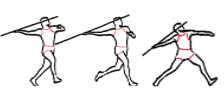
The penultimate step is the powerful stride into the throw. It should feel like a level jump across the ground. The athlete should not collapse, lean back, or slow down. A good penultimate step helps create distance potential because it allows the athlete to bring speed and elastic energy into the final delivery.
A simple image is jumping over a puddle. The athlete should cover ground while keeping the javelin and body organized. This is one of the reasons medicine ball throws and javelin running drills are so useful. They teach the athlete to create power with the legs while maintaining the upper body shape needed to throw.
Back Foot Contact and Throwing Stride
Back foot contact is one of the most important moments in the throw. The back foot should land under the front shoulder with the body still tall and organized. The back foot and hip help put the front foot down. This is where the athlete begins to transfer the approach into the block.
The cue I prefer is to set the right hip up into the throw. This keeps the focus on organization and sequence. The athlete is not simply crashing into the front leg. The athlete is using the back side to create the conditions for an effective block.
If the back foot lands too far in front of the body, it can stop momentum. If the athlete dives with the chest, the throw becomes upper body dominant. If the hip is late, the arm often has to do too much work.
The Block
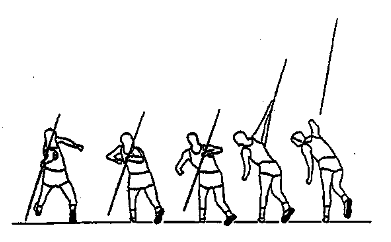
The block is where many athletes and coaches focus their attention. That is understandable because a good block looks powerful. However, the block is only useful if the athlete arrives there with speed, alignment, and timing.
The front leg should be firm. The front side should help hold the body long enough for pressure to build through the hips, trunk, shoulder, arm, and javelin. The athlete should feel force into the ground and a rise through the throw.
A soft block often causes energy to leak. An early opening front shoulder can cause the athlete to lose separation and pull across the javelin. A throw that begins with the upper body usually produces less distance and more stress on the arm.
Release and Javelin Flight
Release is the result of everything that happened before it. The athlete wants to throw through the point with a clean flight. The release angle is usually much lower than many beginners think. The goal is not to throw the javelin straight up. The goal is to deliver it fast, high, and clean through the point.
The flight of the javelin is a coach. If the javelin stalls, turns, dives, or flies with the tail down, it is giving information. That information can help identify whether the athlete pulled down, pulled across, released at the wrong angle, lost alignment, or lacked point control.
Target throws, easy throws, and short approach throws are valuable because they teach touch. Not every throw should be a maximum effort throw. Athletes need enough relaxed throwing to learn how the javelin wants to fly.
Follow Through and Safety
The follow through is not an afterthought. A good follow through allows the athlete to safely move through the throw without fouling or placing unnecessary stress on the body. The athlete should release with enough room before the foul line to complete the movement.
Many developing throwers get too close to the line because they are chasing distance in practice. This can create fear, poor rhythm, and unsafe positions. A good approach gives the athlete room to throw freely.
Advanced Problems Often Come From Simple Causes
Many advanced technical issues are not really advanced at all. They are simple problems hidden inside a fast movement.
| Problem | Possible Cause | Better Direction |
|---|---|---|
| Slowing down into the throw | The approach is too long or too fast for the athlete to control. | Shorten the approach and train rhythm. |
| Poor block position | The back foot and hip are late, or the athlete is poorly organized at contact. | Use medicine ball throws, short approach throws, and better final stride rhythm. |
| Poor javelin flight | The athlete pulls down, pulls across the point, or loses alignment. | Use target throws, relaxed point control work, and simple release feedback. |
| Arm, back, or adductor pain | Volume, intensity, or mechanics exceed the athlete’s current capacity. | Reduce load, improve positions, rebuild gradually, and protect availability. |
This is why technique must be connected to training. A technical problem may need a cue. It may need a drill. It may need better strength, mobility, rhythm, or confidence. It may also need rest.
Technique is not just about correcting positions. Technique is about improving the athlete’s ability to transfer energy through a fast, coordinated, and healthy movement.
The Main Lesson of Part III
Technique is not about looking perfect in a picture. Technique is about creating a system that helps the athlete throw far, stay healthy, and improve over time. The best technical model is simple enough to use in practice, but complete enough to guide long term development.
The javelin throw is a chain of connected events. The athlete runs, aligns, accelerates, sets the right hip up into the throw, blocks, rises, and releases through the point. When those pieces connect, the javelin begins to fly the way it should.
Part III of this field guide is designed to help coaches and athletes build that connection. The goal is not to make the event complicated. The goal is to make the complex understandable, trainable, and repeatable.